
WCHD Offers Tips To Preventing Respiratory Illnesses
WILL COUNTY HEALTH DEPARTMENT
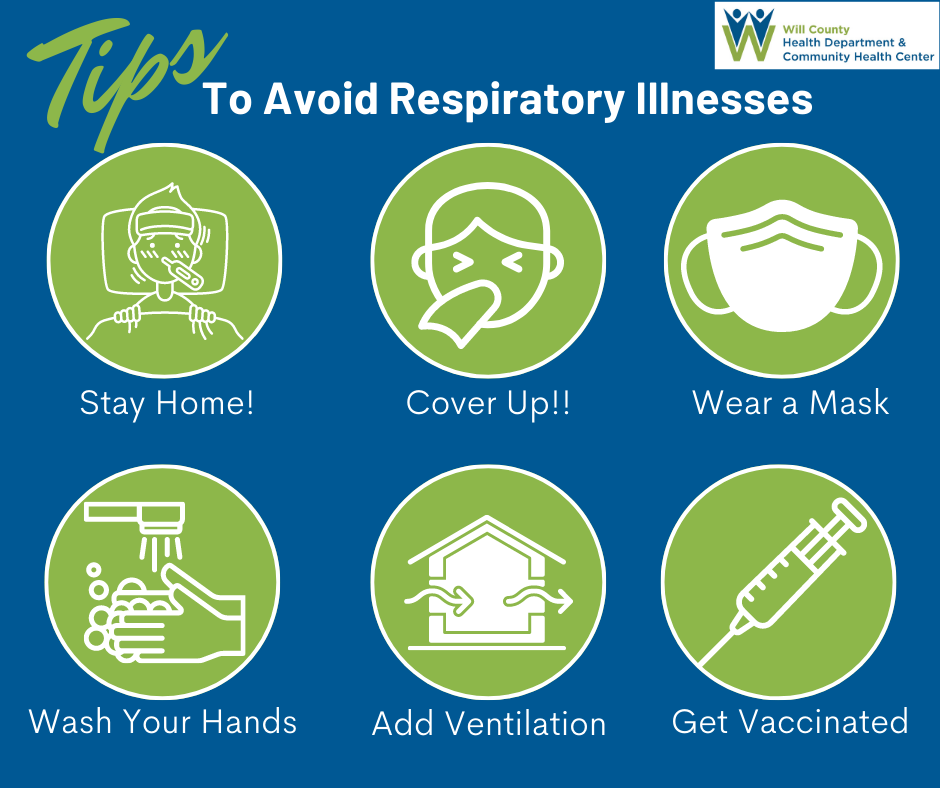
The Centers for Disease Control (CDC) recently issued a health advisory noticing elevated respiratory illnesses, especially in children, caused by multiple viruses occurring simultaneously.
In addition to the common cold, Flu and COVID-19, there has also been an increase in respiratory syncytial virus (RSV), another common respiratory virus that can potentially cause serious symptoms for children and older adults.
The Will County Heald Department has some tips to help avoid respiratory illnesses during the fall and winter. The following preventative measures are strongly encouraged.
- Stay home if you are sick and avoid contact with others until fully recovered, this includes being fever free for at least 24 hours with fever-reducing medication.
- Wear a mask if you develop any symptoms such as a runny nose, cough or fever.
Cover your cough and sneezes to avoid spreading respiratory droplets. Use your elbow, upper shirt sleeve or tissue, not your hands. - Wash your hands frequently for at least 20 seconds or use an alcohol based sanitizer. During holiday parties or communal dining, avoid touching utensils that are frequently handed by others.
- Wear a mask indoors in crowded spaces, especially at large gatherings during the holiday season.
- Whenever possible, maximize indoor ventilation and air circulation.
- Get vaccinated for the Flu and stay up-to-date on the COVID-19 vaccine, including the new bivalent booster.
IDPH SAYS: ROLL YOUR #SLEEVEUP TO #FIGHTFLU
Public health officials in Illinois urge everyone to get a flu vaccine SPRINGFIELD – Getting a flu vaccine is more important than ever as we brace for a dual outbreak of flu and COVID-19 this fall and winter. The Illinois Department of Public Health (IDPH) and local...
CDC UPDATES “HOW COVID IS SPREAD” WEBPAGE
Uncommon circumstances where people with COVID-19 infected others who were more than 6 feet away or shortly after the COVID-19-positive person left an area. Today, CDC issued updated guidance to its How COVID-19 Spreads website, which includes information about the potential for airborne spread of the virus that causes COVID-19.